What is Uranian astrology? The Hamburg School, its history and midpoints
What Uranian astrology is, how the Hamburg School was born, who Alfred Witte was, what the transneptunian planets are, and how midpoints actually work — a full, easy guide.
AstroKolly's content team; all calculations come from the site's own ephemeris and chart engine.
Uranian astrology is one of the boldest reforms classical astrology ever went through. The name comes from the planet Uranus, but the real point is this: instead of putting signs, houses and the classical aspect list at the centre, it puts midpoints and symmetry at the centre. A chart stops being a picture and becomes a set of scales. When a planet falls exactly halfway between two others, those three form a sentence — and Uranian astrology is essentially the art of collecting those sentences.
If you grew up on classical astrology it can feel cold at first: no sign descriptions, no 'your Mars in Leo means...'. But once the logic clicks you get a startlingly precise language. Uranian is less interested in 'why do I feel like this' and more in 'which combination produced this event, and when does it get triggered'. That's why it is still so strong in event astrology, in timing work, and in prediction.
What is Uranian astrology? A short definition
Uranian astrology — properly the Hamburg School, Hamburger Schule — is a technical school of astrology developed in Germany in the early 20th century. It rests on three pillars: midpoints, planetary pictures and axes of symmetry. On top of those the school added its own discovery: eight hypothetical bodies known as the transneptunian planets.
- Midpoint: the degree exactly halfway between two planets. Venus at 10° Aries and Mars at 20° Aries gives a Venus/Mars midpoint of 15° Aries.
- Planetary picture: a three-body equation of the form A + B − C. The mathematical way of saying 'when these two meet, this is what comes out'.
- Axis of symmetry: structures mirrored around a point in the chart, read far more precisely than a classical aspect.
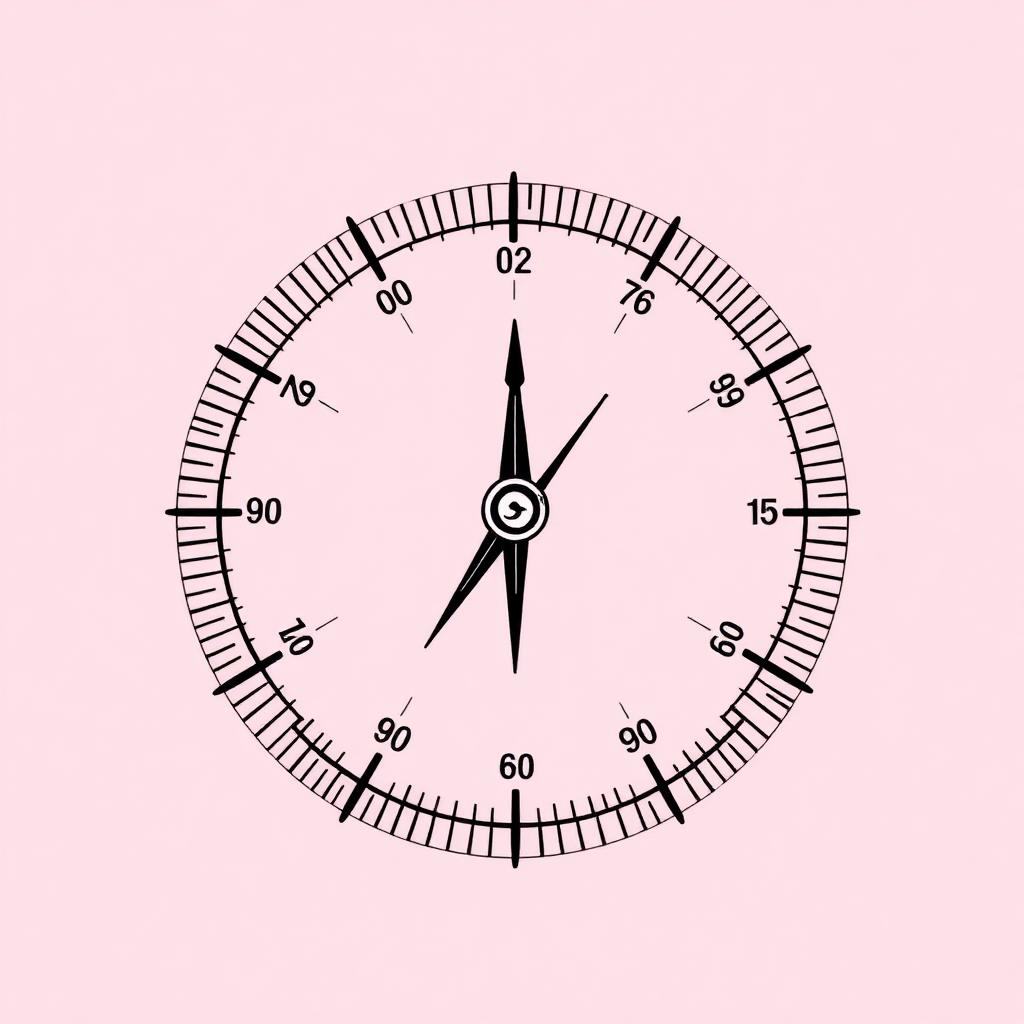
- The 90° and 45° dial: a wheel that compresses the 360° chart, showing every hard aspect at a single glance.
History: a school born in the trenches of World War I
The story starts with Alfred Witte (1878–1941), a surveyor and map engineer from Hamburg who served in an artillery unit during the First World War. As the story goes, while trying to anticipate the timing of bombardments astrologically he found the classical methods weren't precise enough. So he asked an engineer's question: if aspects work, why shouldn't the exact midpoint of an aspect work too?
Back in Hamburg after the war he turned the idea into a system. Through the 1920s, together with Friedrich Sieggrün and Ludwig Rudolph, the Hamburger Schule für Astrologie was founded. The 1928 'Regelwerk für Planetenbilder' (Rulebook for Planetary Pictures) became the school's bible: hundreds of midpoint combinations rendered as short, blunt, almost dictionary-like readings.
Witte's question was simple: why should a planet only affect what it looks at? It may well be affecting whatever it stands in the middle of.
Under the Nazi regime astrology was banned in Germany, books were confiscated and the school came under heavy pressure. In 1941, after the Gestapo came for him, Witte took his own life. The school survived largely thanks to Ludwig Rudolph, who reprinted the books after the war and carried the legacy forward.
In the 1930s Reinhold Ebertin took the Hamburg midpoint technique, dropped the hypothetical planets and built a streamlined version he called Cosmobiology. His 'Combination of Stellar Influences' is still the most widely used midpoint dictionary in the world. So when a modern astrologer says 'transiting Saturn hit my Sun/Moon midpoint', that sentence is a direct descendant of Hamburg.
The move to America came in the 1970s. Hans Niggemann translated the Uranian literature into English, and with figures like Charles Emerson, Arlene Kramer and later Blake Finley it took on its own identity as 'Uranian astrology'. Computers were the real revolution for this school: midpoint work that took hours by hand now takes a second. The post-1990 rise of Uranian astrology is no coincidence — it's about raw computing power.
The transneptunian planets: eight hypothetical points
This is the most controversial part. Witte and Sieggrün, convinced they were seeing effects the known planets couldn't explain, defined eight hypothetical bodies beyond Neptune. These were never observed through a telescope; they are mathematically positioned points. Four are Witte's, four are Sieggrün's.
- Cupido: family, marriage, groups, partnership, artistic community.
- Hades: the past, crisis, decay, what is hidden, archaeology and the dirt underneath.
- Zeus: directed energy, fire, engines, force locked onto a target.
- Kronos: authority, government, mastery, high office and standards.
- Apollon: expansion, multiplication, commerce, science, wide open fields.
- Admetos: stopping, blockage, raw material, depth, immovable resistance.
- Vulkanus: raw power, overwhelming might, endurance.
- Poseidon: ideas, illumination, spirit, culture and the immaterial.
Some modern astrologers refuse to use these points; others swear they are uncannily accurate in practice. The honest answer: astronomically these bodies have never been confirmed, but plenty of working practitioners report consistent results with them as a symbolic language. You don't have to adopt them — the strongest part of the Uranian method, the midpoints, works perfectly without a single transneptunian.
How midpoints actually work in practice
The logic of a midpoint is deeply human. Say Venus is love and Saturn is boundary and responsibility. The Venus/Saturn midpoint is 'the place where love meets responsibility'. If your natal Moon falls on that point, your emotional need is shaped exactly there: a bond that isn't serious won't satisfy you, and at the same time you carry a fear of coldness and distance in love.
We write it as an equation: Moon = Venus/Saturn. In Uranian literature that's a 'planetary picture'. What separates it from a classical aspect reading is that it fuses three symbols into one sentence and uses a far tighter orb: usually 1 degree, and 30 minutes for precision work. A midpoint either hits or it doesn't — there is no 'roughly'.
- Sun/Moon: inner wholeness, the relationship axis, the marriage theme. Considered the single most critical point in Uranian work.
- Venus/Mars: desire and attraction, sexual identity.
- Mercury/Uranus: sudden insight, mental spark, technology.
- Mars/Saturn: disciplined effort or suppressed anger; classically the point of hard labour.
- Jupiter/Neptune: imagination, faith, the ideal; inflated expectation when the edges aren't drawn.
- AS/MC: where personal presence meets the career axis.
The 90-degree dial and why it reads so fast
Uranian astrologers usually swap the classical 360° wheel for a 90° dial. The reasoning: 0, 90, 180 and 270 degrees all belong to the same family of hard aspects. Fold the wheel into four and those four positions land on the same spot, so every hard aspect lines up at a glance. A 45° dial then makes finer contacts like the semisquare and sesquisquare visible.
On a physical dial you rotate a pointer and look for which planetary groups fall into line. Software does this now, but the spirit is identical: the chart is not a narrative painting, it is a set of structures that either align or don't.
What is Uranian astrology good for?
It shines in three areas: event astrology (why did this happen on that exact day), predictive work (narrowing timing with solar arc and directed points), and mundane astrology (national, seismic and economic charts). In personal consultation it is usually not the main technique but a precision layer laid over a classical reading.
So the right way to use it: read your natal chart classically first, then go to the midpoints wherever you find yourself asking 'why is this theme so sharp for me'. More often than not, the answer is hiding there.
- Start here: see what touches your Sun/Moon midpoint.
- Then: watch transits to AS/MC and Venus/Mars.
- For timing: check whether solar arc directed planets are triggering those midpoints.
- Keep the orb tight. A wide orb ruins Uranian work.
Criticism, and an honest verdict
The main criticism is that the transneptunian planets have no observational basis. The second is that the language can feel mechanical, even fatalistic: an equation like 'Mars/Saturn = Hades' risks describing a person as an event machine. Defenders point to the technique's hit rate and its clarity in timing.
Our position is simple: astrology isn't a list of fates, it's a tool for awareness. Uranian technique is a very sharp lens inside that toolkit. Use the lens — but read what you see as a tendency, not a verdict.
A small glossary
- Hamburger Schule: the original German name of Uranian astrology.
- Planetary picture: a planetary equation of the form A + B − C.
- Dial: the 90° or 45° calculation wheel.
- TNP: transneptunian planet, one of the eight hypothetical points.
- Cosmobiology: Ebertin's streamlined version with the TNPs removed.
If you want to try this on your own chart, pull your natal chart in the Charts section, take the planetary degrees and work out your Sun/Moon and Venus/Mars midpoints. If you get stuck, ask in Ask Kolly and we'll look at which midpoint matters most for you.